Last updated 2026-08-18
TL;DR
Connecticut roll-off dumpster operators renew through the Department of Energy and Environmental Protection (DEEP) solid waste hauler registration, plus DMV vehicle registration and any local permits. Annual DEEP renewal costs vary by fleet size. State processing typically runs 4 to 8 weeks. There is no single statewide license. The paper path is three layers: state environmental, state motor carrier, and local.
Do you need a license for roll-off dumpster in Connecticut?
Yes, though calling it one "license" undersells the reality. Connecticut wants at least three separate authorizations before you can legally collect, haul, and dump solid waste.
First is a Solid Waste Hauler Registration from the Connecticut Department of Energy and Environmental Protection (DEEP). Under Connecticut General Statutes Section 22a-208 and the collection rules in chapter 446d, no person may collect or transport solid waste in the state without being registered with DEEP [1]. Roll-off service sits squarely inside that definition. You renew this every year.
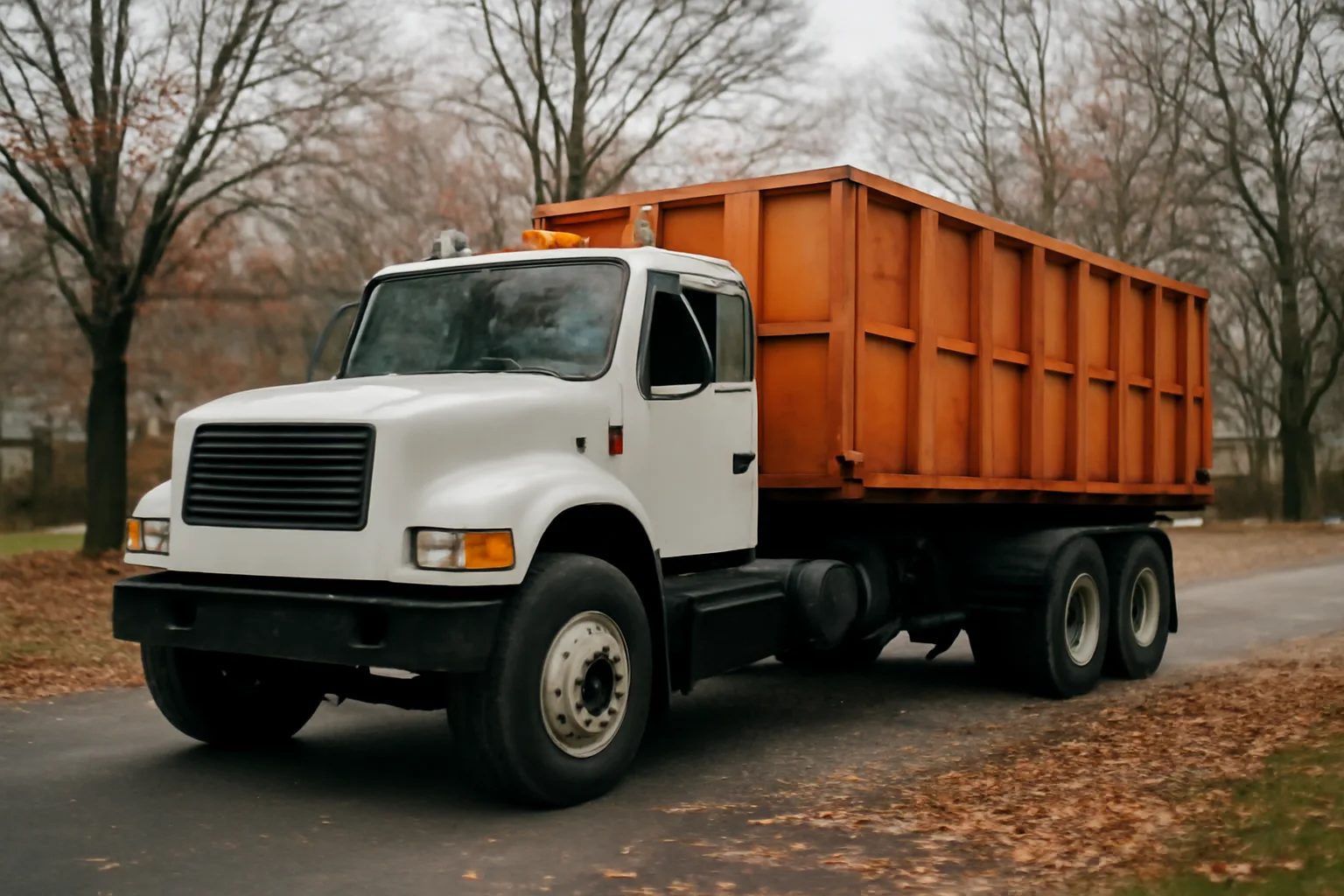
Second is commercial vehicle registration through the Connecticut Department of Motor Vehicles. Roll-off trucks are heavy, usually 26,001 pounds or more gross vehicle weight, which puts them in Class 7 or Class 8. Those trucks need CDL-qualified drivers and must follow Federal Motor Carrier Safety Administration (FMCSA) rules if you cross state lines [2].
Third is the local layer. Many Connecticut towns, Hartford, Bridgeport, and New Haven among them, want a separate hauler permit or business license before you operate inside their limits. Some require a certificate of approval tied to specific disposal sites. Check with every town you plan to serve, not only the town where your shop sits.
So yes, you need a license. You actually need several. The DEEP registration is the one most people mean when they ask, and it's the one with teeth. Hauling without it is a felony under CGS 22a-226 [3].
What is the Connecticut DEEP solid waste hauler registration?
The DEEP solid waste hauler registration is the state credential every roll-off operator in Connecticut needs. It lets you collect, transport, or transfer solid waste in the state. Without it, none of your trucks belong on the road hauling debris.
The registration ties to your company, not to individual trucks. DEEP still wants you to list the vehicles you run, so any truck you add mid-year has to be reported. The agency handles this through its Solid Waste Program, and the current application and renewal packets live on DEEP's waste management pages [1].
Renewal is annual. DEEP sends notices, but you own your expiration date. Let the registration lapse, even by a day, and you are operating without authorization. That is a bad place to be during a DOT roadside inspection or a compliance audit.
The registration covers standard municipal solid waste, construction and demolition debris (the most common roll-off load), and bulky waste. Some categories, like medical waste, hazardous waste, or asbestos-containing material, need entirely separate permits and cannot move under a standard hauler registration [1].
How much does roll-off dumpster renewal cost in Connecticut?
DEEP charges a tiered annual fee for solid waste hauler registration, scaled by the number of vehicles in your fleet. Recent published schedules put fees in the range of roughly $100 for a one-truck operation up to $500 or more for larger fleets, and DEEP adjusts these over time [1]. Confirm the current fee with DEEP before you file, because tables in older guidance go stale.
Beyond DEEP, budget for the rest of the stack.
| Cost Item | Typical Range | Notes |
|---|---|---|
| DEEP hauler registration renewal | $100-$500+ | Tiered by fleet size; confirm with DEEP |
| CT commercial vehicle registration (per truck) | $1,000-$2,500+ | Based on GVW; DMV fee schedule applies [4] |
| FMCSA biennial MCS-150 update | Free | Required every 2 years if you have a USDOT number [2] |
| Municipal hauler permit (per town) | $50-$300+ | Varies widely; some towns charge nothing |
| Disposal site permit renewal (if applicable) | Varies | Site-specific; some transfer stations charge annually |
The cost most operators lowball is per-truck commercial registration. A heavy roll-off truck in Connecticut can run well over $1,500 a year in registration alone, depending on weight class and supplemental fees [4]. Run five trucks and that line can top $10,000 a year.
Insurance is not a renewal fee, but DEEP and most towns want proof of current liability coverage with any renewal. Budget that on its own.
How long does roll-off dumpster renewal take in Connecticut?
For a clean DEEP solid waste hauler renewal with no fleet or ownership changes, plan on 4 to 8 weeks from submission to your updated registration. That reflects typical DEEP processing, but workload swings. Filing 6 to 8 weeks before your expiration date is not paranoid. It's correct.
Add a change, a new truck, a new owner, a new disposal site on your route, and processing slows. Material changes can push review to 10 to 12 weeks or more.
DMV commercial vehicle registration moves faster for straight renewals, often 1 to 2 weeks by mail or same day at a counter. CDL renewals for your drivers run on their own DMV track [4].
Local permits vary the most. Some towns clear you at a counter in a week. Others route hauler permits through a public works board or a council cycle that eats 30 to 60 days. Expanding into a new town? Start that local application first, not last.
Give yourself a 90-day runway before your deadline. It sounds like a lot. Between DEEP processing, possible DMV delays, and local timelines all running at once, 90 days is often exactly what the job needs.
What documents do you file for Connecticut DEEP renewal?
DEEP's renewal packet for solid waste hauler registration usually asks for the items below. Confirm the current list with DEEP, because requirements shift.
1. Completed renewal application form (from DEEP's solid waste registration pages) [1] 2. Current vehicle list with make, model, year, VIN, and plate for each truck 3. Proof of current liability insurance meeting DEEP minimums 4. The renewal fee (check or online payment per DEEP's instructions) 5. Any updated ownership or contact information
DEEP does not usually require a physical vehicle inspection at renewal unless a complaint or a compliance issue sits on your record. It does cross-reference your vehicle list against DMV data, so mismatches get flagged.
Haul construction and demolition debris to a specific permitted facility, and you may also need an updated list of approved disposal sites. Connecticut runs a network of permitted C&D processing facilities, and DEEP wants to know where your material lands [8].
One thing that catches smaller operators: if you are a sole proprietor or a single-member LLC, DEEP may ask for a personal financial responsibility disclosure on top of the company information. Read the current renewal instructions closely on that point.
How do Connecticut municipal permits work for roll-off dumpsters?
There is no statewide standard here. Connecticut's 169 municipalities are largely on their own on this question, which means you may face up to 169 different conversations.
Most of your volume comes from a handful of towns. Work those first. Some issue a blanket hauler permit covering all your activity in town. Others tie a permit to a specific job site, which piles on paperwork when you rotate containers across dozens of addresses.
Hartford has historically required registered haulers to get a city permit and keep a local contact for compliance. New Haven and Bridgeport run similar rules. Smaller suburban towns often ask for nothing beyond the DEEP state registration.
Your best source is the town clerk or the public works department, not zoning. Zoning handles where a dumpster can sit on private property. Public works handles who can run one commercially. Different desks. Confusing them costs you time.
If you are eyeing a neighboring state, the roll-off dumpster renewal in Massachusetts setup is similar in its town-by-town fragmentation. Read that and Connecticut will feel familiar.
What are the FMCSA requirements for Connecticut roll-off trucks?
Run your roll-off trucks only inside Connecticut and you may not need FMCSA registration. Pure intrastate operators generally answer to state motor carrier rules rather than federal ones. But Connecticut has adopted many FMCSA safety regulations by reference for commercial vehicles above 10,001 pounds, which covers essentially every roll-off truck in the state [2].
Cross a state line at all, even a run to a facility in Rhode Island or Massachusetts, and you need a USDOT number and must follow federal carrier rules. The FMCSA MCS-150 form (Motor Carrier Identification Report) has to be updated every two years. The update is free and filed online [2].
FMCSA's licensing and insurance guidance says carriers operating commercial motor vehicles "in interstate commerce" must register and keep current insurance filings [6]. For roll-off work, the practical test is whether you ever cross a state line with a loaded truck. If you do, you're in federal jurisdiction.
Connecticut also enforces weight limits hard. A loaded roll-off truck with a full 30-yard container can approach or top 80,000 pounds, the federal limit on Interstate highways. Exceed limits and you need an overweight permit from ConnDOT [7]. That permit is separate from your DEEP registration and your FMCSA credentials.
What happens if your Connecticut registration lapses?
Running without a current DEEP solid waste hauler registration is not a paperwork slip. Connecticut General Statutes 22a-226 makes it a Class D felony to operate a solid waste facility or transport solid waste without required authorization [3]. Enforcement has historically aimed at egregious or repeat violators, but the statute stands and DEEP does refer cases to the Attorney General.
The faster risk is a roadside DOT inspection. If an inspector pulls your operating authority and finds an expired registration, your truck can go out of service on the spot. That means leaving the load where it is, arranging another carrier to move the truck legally, and clearing a compliance order before you run again.
Losing DEEP registration tends to cascade. C&D disposal facilities in Connecticut are permitted separately, and some require haulers to show current state registration before accepting a load. An expired registration can mean you cannot legally tip at your main disposal site, which shuts you down that day.
If you do lapse, call DEEP directly. The agency can sometimes process an expedited renewal when the lapse was unintentional and your compliance history is clean. No guarantee, though. DEEP is not obligated to rush.
How does Connecticut DEEP registration compare to neighboring states?
Connecticut sits in the middle of the regional pack for regulatory weight.
Rhode Island runs a similar annual solid waste hauler registration through its DEM, with comparable fee tiers. Massachusetts runs a tiered solid waste transporter permit through MassDEP, and its fees climb higher for bigger fleets. New York carries a heavier local layer, especially in New York City, where the Business Integrity Commission licensing process adds real cost and time on top of state rules.
Thinking about expansion? Roll-off dumpster renewal in Florida makes a useful contrast because Florida's county-level permitting is even more scattered than Connecticut's municipal layer. Roll-off dumpster renewal in Colorado is simpler on the state side but has its own local tangle in the Front Range towns.
| State | Primary Regulator | Renewal Frequency | Fee Range (approx.) |
|---|---|---|---|
| Connecticut | DEEP | Annual | $100-$500+ (fleet-tiered) |
| Rhode Island | DEM | Annual | Similar tiered structure |
| Massachusetts | MassDEP | Annual | Higher for larger fleets |
| New York | DEC + local BIC (NYC) | Annual + BIC license | Significantly higher in NYC |
| Florida | DEP + county | Annual | Varies widely by county |
These ranges reflect publicly available information and are approximate. Confirm current fees with each state agency before you plan.
Connecticut's overall burden is moderate. The DEEP process is reasonably documented and the agency picks up the phone. The municipal layer is the part that surprises operators, especially those coming from states with centralized permitting.
What is the paper path for a first-year operator in Connecticut?
Starting fresh in Connecticut roll-off service? The order matters. Here is the sequence that keeps you from wasting weeks.
First, form your legal entity and get your EIN. DEEP and DMV both want a business entity on file, and your insurance carrier needs one before it writes a commercial policy.
Second, bind your insurance. DEEP requires proof of liability coverage with the initial registration. Get commercial auto and general liability in place before you file.
Third, apply to DEEP for solid waste hauler registration. This is your longest lead-time item on the state side. Get it moving first.
Fourth, register your trucks with DMV. If your operation is interstate, pull your USDOT number through FMCSA at the same time [2].
Fifth, contact the public works office or town clerk in every town you plan to serve and ask straight: do you require a separate hauler permit, and if so, what's the application process?
Sixth, line up your permitted disposal facility or transfer station and confirm they'll take your loads under your registration credentials.
The first-year paper path in Connecticut is doable in 60 to 90 days if you start in the right order. Most delays come from operators waiting on DEEP approval before touching the DMV and municipal steps, when all three tracks can and should run in parallel.
If you want a structured checklist for this path, RollOffPath's independent kit (at /start for $199) organizes the document sequence by state and flags the errors that stall first-year applications. That's the only paid mention here. Everything else is the free reference.
Where do you actually submit Connecticut DEEP renewal documents?
DEEP accepts solid waste hauler registration renewals by mail and, more and more, through its online environmental reporting systems. The current submission address and portal access sit on DEEP's solid waste registration pages [1]. Do not trust an address you found in a third-party guide, this one included, because DEEP updates mailing addresses and portal URLs from time to time.
DEEP's waste management and compliance offices are mostly in Hartford. Mailing your renewal? Use certified mail with return receipt. That gives you a documented submission date, which matters if a processing delay makes your registration look lapsed during review.
For status checks, DEEP's Solid Waste Program staff take calls. They do respond, though timing swings by season. Late spring, compliance season, tends to run slow. Filing renewals in late fall or early winter, if your expiration date allows, often gets you a faster reply.
RollOffPath is an independent publisher and is not affiliated with DEEP or any Connecticut agency. Confirm all current submission instructions directly with DEEP before you send anything.
Frequently asked questions
Do you need a license for roll-off dumpster service in Connecticut?
Yes. Connecticut wants at minimum a DEEP solid waste hauler registration under chapter 446d, commercial vehicle registration through DMV, and local permits in many towns. The DEEP registration is annual and covers collection and transport of solid waste, including C&D debris. Hauling without it violates CGS 22a-226. Check with DEEP and each municipality you plan to serve for current requirements.
How much does roll-off dumpster registration cost in Connecticut?
DEEP solid waste hauler registration fees are tiered by fleet size and run roughly $100 to $500 or more a year, though the exact schedule changes and should be confirmed with DEEP. Add per-truck commercial registration at DMV, which can top $1,500 per heavy truck. Local municipal permits usually cost $50 to $300 per town. Total annual renewal for a small fleet can easily reach several thousand dollars.
How long does Connecticut DEEP roll-off renewal processing take?
Plan on 4 to 8 weeks for a clean DEEP solid waste hauler renewal with no fleet or ownership changes. Material changes like new vehicles or a new disposal site can push it to 10 to 12 weeks. Submit at least 60 days before your expiration date. Municipal permits run on separate timelines; some towns take 30 to 60 days through a board review.
Is a USDOT number required for Connecticut roll-off dumpster trucks?
If your trucks stay inside Connecticut, intrastate rules apply and a USDOT number may not be required. If you ever cross a state line with a loaded truck, even occasionally into Rhode Island or Massachusetts, you need a USDOT number and must follow FMCSA rules. Connecticut also enforces FMCSA safety standards for commercial vehicles over 10,001 pounds in-state. Confirm your situation with FMCSA.
What types of waste can a standard Connecticut DEEP registration cover?
A standard DEEP solid waste hauler registration covers municipal solid waste, construction and demolition debris, and bulky waste. It does not cover hazardous waste, medical waste, or asbestos-containing material. Those need separate DEEP permits. If you plan to accept any regulated material in your roll-off containers, confirm the permit requirements with DEEP's Solid Waste Program before you take those loads.
Do Connecticut municipalities require their own roll-off hauler permits?
Many do, but there is no statewide standard. Hartford, Bridgeport, and New Haven have historically required separate city hauler permits. Smaller suburban towns often accept DEEP registration alone. Contact the public works department or town clerk in each municipality you plan to serve. Do not assume state DEEP registration is enough to operate everywhere. Local rules can include job-site-specific permits in some places.
What happens if my DEEP solid waste hauler registration expires?
Operating with an expired DEEP registration violates CGS 22a-226, which makes unauthorized solid waste transport a Class D felony. Practically, an expired registration can get trucks placed out of service during DOT inspections and get loads refused at permitted disposal facilities. If you lapse, call DEEP immediately. The agency can sometimes expedite renewals for operators with clean compliance records, but there is no guarantee.
Can I add trucks to my Connecticut DEEP registration mid-year?
Yes. DEEP requires you to keep a current vehicle list as part of your registration. Add a truck mid-year and you need to notify DEEP and update the registration. Mid-year vehicle additions run through DEEP's Solid Waste Program. There may be a fee adjustment or a supplemental filing. Contact DEEP directly for the current procedure before you put a new truck in service.
Does Connecticut require a CDL to drive a roll-off dumpster truck?
Yes, if the truck's gross vehicle weight rating exceeds 26,001 pounds. Most roll-off trucks land in Class 7 or Class 8, well past that line. A Connecticut CDL Class A or Class B is required depending on the vehicle configuration [9]. CDL renewals go through the Connecticut DMV separately from DEEP registration. Drivers also have to meet FMCSA medical certification requirements.
How does Connecticut DEEP registration renewal differ from initial registration?
Initial registration takes a full application with all business, vehicle, and insurance documentation, plus a DEEP review of your operational plan including disposal sites. Renewal is lighter in most cases: confirm existing information, update changes, pay the annual fee. But if anything material changed during the year, including ownership, fleet size, or disposal facilities, renewal triggers a deeper review closer to initial registration.
What insurance does Connecticut DEEP require for roll-off haulers?
DEEP requires proof of current commercial liability insurance for both initial registration and renewal. Minimum coverage amounts appear in DEEP's hauler registration requirements; confirm the current minimums directly with DEEP because they change. Most operators carry commercial auto liability plus general liability. Some disposal facilities and towns want higher limits or additional insured endorsements above DEEP minimums.
Are there weight limit rules for roll-off trucks in Connecticut?
Yes. Connecticut enforces the federal Interstate weight limit of 80,000 pounds gross. A fully loaded roll-off truck with a heavy debris container can approach or exceed that. Overweight permits from the Connecticut Department of Transportation are required for loads over legal limits [7]. Enforcement is active, and fines scale with the degree of overweight. Plan container weights carefully, especially for concrete or asphalt.
Where can I find the current Connecticut DEEP solid waste hauler renewal application?
The renewal application and instructions are posted on DEEP's solid waste pages at portal.ct.gov/deep. Confirm you are using the current version straight from the DEEP website, not a cached or third-party copy, since forms are updated periodically. DEEP's Solid Waste Program staff can also send the current packet by phone or email. Do not rely on a form downloaded more than a year ago.
How do Connecticut roll-off dumpster renewal requirements compare to other New England states?
Connecticut's DEEP registration is structured much like Rhode Island's DEM solid waste hauler permit and Massachusetts' MassDEP transporter permit, all annual and tiered by fleet. Massachusetts fees tend to run higher for larger fleets. New York adds a big extra layer through the NYC Business Integrity Commission for metro-area operators. Connecticut's municipal permit layer is comparable to Massachusetts in complexity, with 169 towns setting independent rules.
Sources
- Connecticut DEEP, Waste Management and Disposal: Connecticut requires registration with DEEP for any person collecting or transporting solid waste in the state, including C&D debris; registration is annual
- FMCSA, MCS-150 Motor Carrier Identification Report: Carriers operating commercial motor vehicles in interstate commerce must file FMCSA MCS-150 updates every two years
- Connecticut DMV, Vehicle Services: Commercial vehicle registration fees in Connecticut scale by gross vehicle weight; heavy trucks (Class 7-8) incur fees that can exceed $1,500 annually
- FMCSA, Registration Licensing and Insurance: FMCSA requires carriers operating commercial motor vehicles in interstate commerce to maintain registration and current insurance filings
- Connecticut DOT, Oversize/Overweight Permits: Connecticut requires overweight permits from ConnDOT for vehicles exceeding legal weight limits on state roadways
- Connecticut DEEP, Solid Waste: Connecticut DEEP's Solid Waste Program oversees permitted C&D processing facilities and requires haulers to document approved disposal sites
- FMCSA, Commercial Driver's License Standards (49 CFR Part 383): CDL is required for drivers of commercial motor vehicles with GVWR over 26,001 pounds, covering Class 7 and 8 roll-off trucks
- Connecticut DMV, Driver Services: Connecticut CDL Class A or B license is required for drivers of heavy commercial vehicles above 26,001 pounds GVWR