Last updated 2026-08-18
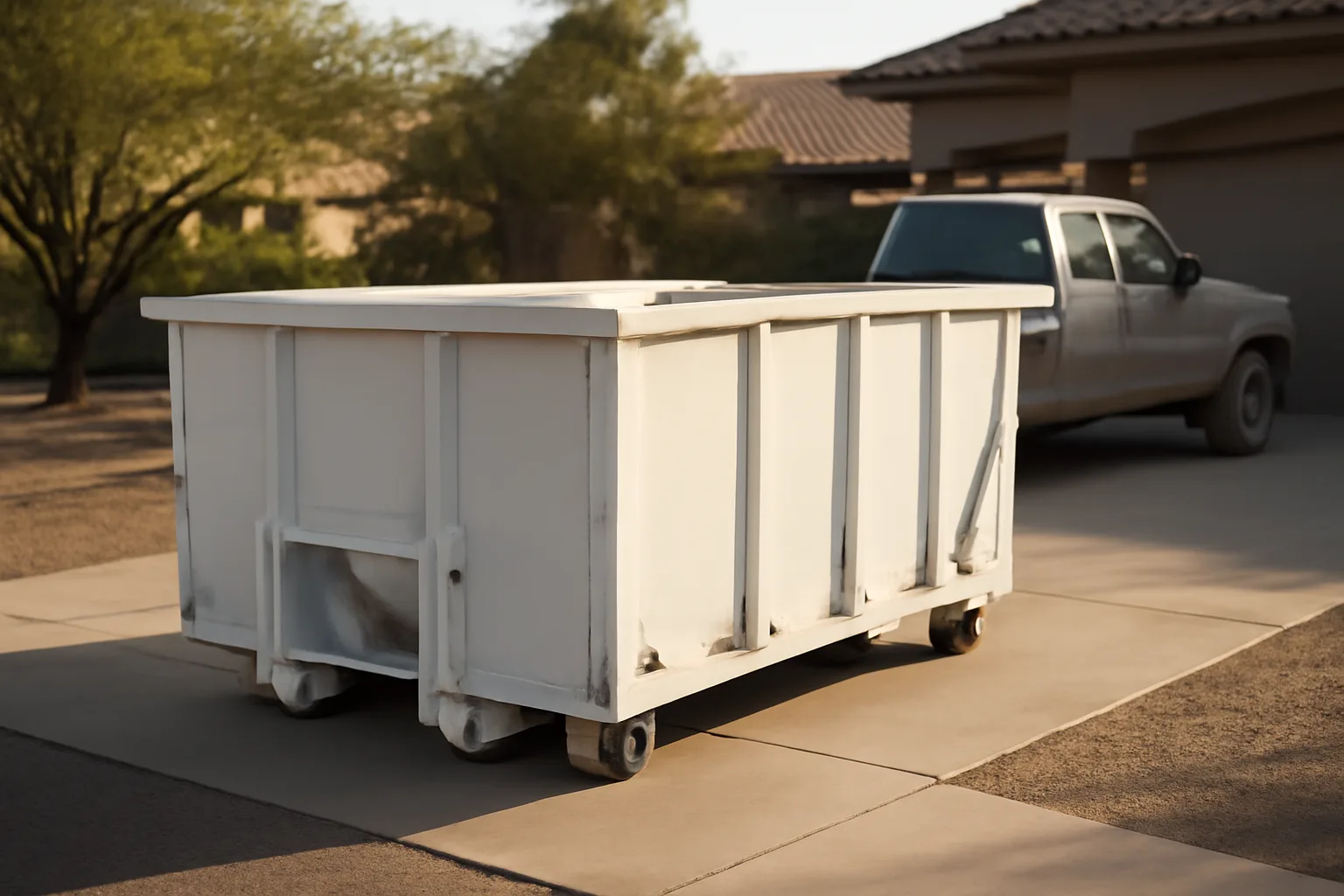
TL;DR
Arizona has no single state roll-off dumpster license. You register for ADEQ solid waste vehicle registration, get an Arizona transaction privilege tax (TPT) license, form a legal entity, and secure local city or county business licenses. Hauling solid waste for pay without ADEQ registration is illegal under A.R.S. 49-762. Pricing and turnaround vary; verify current fees with ADEQ and your city.
Do you need a license for roll-off dumpster in Arizona?
You do not need a single roll-off dumpster license in Arizona. You need three separate pieces of paper before you haul waste for pay: an ADEQ solid waste vehicle registration, an Arizona transaction privilege tax license, and whatever business license your city or county requires. A.R.S. § 49-762 makes it unlawful to collect or transport solid waste in this state without registering each vehicle with ADEQ [1]. The tax license comes from the Arizona Department of Revenue [3].
You also form the company with the Arizona Corporation Commission and register a trade name with the Arizona Secretary of State if you do business under a name other than your legal entity name [9]. That is the entity step, not the hauling permit. The city piece matters more than people think. Phoenix, Tucson, Mesa, and smaller towns each handle business licensing differently. Some require a general business license. Some add right-of-way or placement permits. Start with the state paper, then call the revenue or business licensing desk in the city where your containers will actually sit.
If you want the full Arizona-specific paper path laid out as one checklist, read the roll-off dumpster license in Arizona guide. It separates what the state enforces from what a city might ask for.
What does ADEQ vehicle registration actually require in Arizona?
ADEQ registers each truck you use to collect or transport solid waste. The registration is not a business license in the common sense. It attaches to the vehicle, and you renew it every year. If you add a second truck, you register the second truck. If you sell a truck, you cancel that registration.
A.R.S. § 49-762 covers the core prohibition: you cannot engage in the business of collecting or transporting solid waste without a valid ADEQ vehicle registration for each vehicle [1]. ADEQ also publishes the current application and renewal forms on its solid waste vehicle registration page [2]. Fees change, so confirm the current per-vehicle amount with ADEQ before you quote a customer.
This step catches new haulers because it sits outside the normal business filing world. You can have an LLC, a TPT license, and a branded truck, and you will still be running illegally in Arizona if that truck has no ADEQ registration.
How much does roll-off dumpster cost in Arizona?
No single number covers it. The honest answer is that a one-truck startup in Arizona costs less than people think on paper and more than they think on the truck. Paper costs include your LLC filing, trade name registration, TPT application, ADEQ vehicle registration, and city business license. Confirm every fee with the agency because Arizona fee schedules change and some cities post outdated amounts.
The state-level recurring tax is clearer. Arizona charges a 5.6% transaction privilege tax at the state level for most taxable activity, and counties and cities add their own rates on top [4]. That means every dumpster rental invoice in Arizona carries TPT unless the transaction qualifies for an exemption. Build 5.6% plus your local rate into your quote from the first invoice.
Labor is another real number. The U.S. Bureau of Labor Statistics puts it plainly: "The median annual wage for refuse and recyclable material collectors was $45,190 in May 2023" [5]. Arizona may run higher in metro areas, lower in rural counties. If you drive the truck yourself, compare what you could pay a driver against what you need to earn.
Then there is the equipment. A 20 yard can, a 30 yard can, a 40 yard can. The chart below shows the four standard roll-off container sizes and their typical capacities [8]. Get written quotes for each size before you decide what inventory to carry.
How long does roll-off dumpster take in Arizona?
Arizona does not publish one starting timeline. The pieces move on different clocks. Entity formation and an online EIN are usually same-day or next-day. The TPT license comes through AZTaxes and typically issues quickly once ADOR has your documents [3]. ADEQ vehicle registration depends on how complete your application is and whether ADEQ has questions [2]. City licenses vary by staff workload.
Plan around the slowest piece, not the fastest. I would not quote a customer a guaranteed delivery date until every one of those steps is done. You can order cans and line up disposal contracts while the paperwork moves, but do not accept a booking that depends on a registration that has not been approved.
If you need a hard date for a contract or a loan, ask each agency for its current processing estimate in writing. ADEQ and ADOR both answer phone calls and email. Cities sometimes list review times on their business licensing pages. Trust those numbers over any online article, including this one.
What equipment do you need for a one-truck Arizona roll-off?
You need a truck with a roll-off hoist, containers, and a way to move them safely. Most one-truck startups begin with a used chassis married to a used hoist, then add containers based on the jobs they actually bid. A 40 yard can is heavy when full, and many Arizona driveways and alleys will not take it.
The four standard container sizes are 10, 20, 30, and 40 cubic yards [8]. Match the can to the debris. A 10 or 20 yard open top handles a small remodel. A 30 yard handles a roof tear-off. A 40 yard handles new construction, but you need enough truck and enough clearance.
Weigh your truck loaded vs empty before you commit to a route. Arizona's state highways can weight restrict outside cities. A truck that is legal at 26,000 pounds gross becomes a different animal with a full 40 yard can of concrete. Get payload numbers from the hoist dealer and the chassis builder in writing.
If you are running one to five cans, RollOffPath's $199 1-5 Can Independent Kit turns this part of the startup into a paper checklist.
What insurance and DOT numbers does an Arizona roll-off need?
Insurance is not optional and not cheap. You need commercial auto liability because the truck is a commercial motor vehicle. You need general liability for property damage, because a can dropped on a driveway or a roof edge clipped by a cable creates a claim. You need pollution or environmental coverage if you haul anything with asbestos, lead paint, or other regulated material.
Federal motor carrier rules apply if you cross state lines. A dumpster truck over 26,000 pounds gross vehicle weight rating used in interstate commerce needs a USDOT number [6]. A roll-off truck at 26,001 pounds or more gross vehicle weight rating generally requires a commercial driver license [10]. If you cross state lines, you also complete annual Unified Carrier Registration [11].
FMCSA sets minimum liability coverage levels for motor carriers [7]. Your agent will quote based on payload, radius, and disposal sites. Do not buy a bare state minimum and hope. A roll-off truck that tips a container onto a parked car is exactly the claim pattern that gets small haulers cancelled.
How do you price an Arizona dumpster rental?
Price by cost plus margin. The cost side starts with disposal. Every load you drop at a transfer station, landfill, or recycling facility has a per-ton gate fee. The gate fee varies by county and by waste type. Mixed construction debris costs more than clean concrete. Get a written rate sheet from every facility you might use.
Add delivery labor, fuel, truck depreciation, container repair, and the 5.6% state TPT plus local rates [4]. Then add margin. In a metro market with five competitors, your margin may be thin. In a rural county with one other hauler, you can hold a little more.
Do not set your price by copying a national dumpster brand. Those companies have volume and disposal contracts you do not have yet. Set your own cost floor, then decide whether the job is worth accepting. If the price puts you below the cost floor, let the job go.
What local city and county rules apply in Arizona?
Arizona delegates a lot of the annoying stuff to cities and counties. Your cans may need a placement permit for a street or right-of-way. Your yard may need a conditional use permit if it is in a residential zone. Your truck may need a franchise agreement in some incorporated cities. Call the city clerk, business licensing, or public works desk before you sign a lease or order signage.
Counties with active construction markets may have solid waste programs that track where waste goes. Ask the county environmental health or solid waste department whether they require a separate hauler registration or disposal report. Not every county does, but the ones that do treat it as real.
The safest order is state first, city second, county third. State registration usually has no discretion, city licensing may have conditions, and county rules can surprise you. Do all three before you spend big on paint and decals.
How do the TPT and tax pieces work in Arizona?
Arizona's transaction privilege tax is a tax on the privilege of doing business in the state. You charge it to customers on every dumpster rental unless the job qualifies for a specific exemption. The state rate is 5.6% [4]. Counties and cities can add their own TPT rates, so the total rate on your invoice may be higher than 5.6%.
Register for a TPT license before you do business [3]. ADOR uses AZTaxes for filing and payment. You will file monthly, quarterly, or annually depending on your expected tax liability. New haulers often get a monthly filing frequency. Pay the tax when it is due, not when the customer pays you. This trips up new owners.
Keep your records by location. If you deliver in Phoenix but the business is based in Mesa, the local tax rate may come from the customer location or the use location depending on how ADOR classifies the transaction. Confirm with ADOR or a tax preparer.
What records and waste stream rules do Arizona roll-off operators face?
Solid waste rules in Arizona mostly live under ADEQ. You need to know what you are allowed to put in the can and what must go somewhere else. Batteries, electronics, asbestos, tires, and some construction materials have separate disposal paths. If you put a regulated material in a general C&D can, ADEQ or the local landfill can reject the load and you may eat the fee.
Keep a simple record of each job: customer name, job site, dates, container size, gross and tare weights, disposal site, and gate fee. That record protects you when a customer claims you overcharged or a landfill says you contaminated a load. It also makes TPT filing less awful.
Hazardous waste requires a manifest, not a roll-off [12]. If a customer tries to hand you lead paint chips, asbestos siding, or lab waste, refuse the load and explain you are not a hazardous waste transporter. That one conversation saves your permit and your insurance.
What mistakes waste money in the first Arizona year?
Buying a new truck before you have three months of booked jobs is the biggest one. A one-truck Arizona run pays the note whether the phone rings or not. Start with a used chassis and a good inspection. The second biggest mistake is undercutting without knowing your disposal cost. If your gate fee is $85 a ton and you charge $350 flat for a 30 yard can of mixed debris, you may be paying to work.
Third, do not ignore the TPT and ADEQ renewals. Both can lapse quietly. An expired registration gets your truck grounded. An unpaid TPT return gets a lien. Set reminders now, before you take the first deposit.
Fourth, reserve money for tires and container repairs. Customers load cans to the top and beyond. You will re-cable a hoist, replace a hinge, and straighten a door. Think of that as a monthly cost, not an emergency.
How does starting an Arizona roll-off compare to nearby states?
Arizona is simpler than California but tighter than some rural mountain states on vehicle registration. California has its own permit system through local county environmental health departments, and how to start roll-off dumpster in California explains that paper path. The California permit guide is roll-off dumpster license in California.
Colorado has different state and county boards for solid waste. Read how to start roll-off dumpster in Colorado and its roll-off dumpster license in Colorado guide for the differences.
If you haul between Arizona and a neighboring state, you add federal and state motor carrier rules on top of the Arizona ADEQ registration. Do not assume an Arizona registration lets you legally drop a can in California or New Mexico. Cross-border jobs are rare for new one-truck operators, but they happen along the Colorado River and in border towns.
RollOffPath is an independent publisher, not a law firm, and it does not give legal advice.
Frequently asked questions
Do you need a license for roll-off dumpster in Arizona?
You need three pieces: an ADEQ solid waste vehicle registration, an Arizona transaction privilege tax license from ADOR, and whatever city or county business license the local jurisdiction requires. A.R.S. 49-762 makes it unlawful to collect or transport solid waste without registering each vehicle with ADEQ.
How much does roll-off dumpster cost in Arizona?
Costs split across paper and equipment. Paper includes LLC filing, trade name, TPT application, ADEQ vehicle registration, and city license. Arizona's state TPT rate is 5.6% plus local rates. Equipment is the big variable. Confirm all current fees with the issuing agency before you quote.
How long does roll-off dumpster take in Arizona?
Arizona does not publish one timeline. Entity and EIN steps are usually same-day. TPT and ADEQ review times vary by workload. City licenses vary more. Plan around the slowest piece and do not guarantee a customer a delivery date until every registration is approved.
Is a TPT license the same as a business license in Arizona?
No. The TPT license authorizes you to collect and remit Arizona transaction privilege tax. A city or county business license authorizes you to operate in that local jurisdiction. You often need both before the first paid haul.
Do I need a DOT number for a roll-off truck in Arizona?
You need a USDOT number if the truck has a gross vehicle weight rating over 26,000 pounds and you operate interstate. Staying entirely inside Arizona may avoid federal registration, but Arizona and local motor carrier rules still apply.
Can I start with one dumpster and no truck?
You can start with one or two cans and rent a truck or use a subcontractor, but you will still need the ADEQ vehicle registration on the truck that actually hauls. Brokering waste without controlling a registered hauling vehicle creates enforcement risk. Most owners start with one used truck and three to five cans.
What is the minimum insurance for roll-off in Arizona?
Arizona does not publish a single minimum for intrastate roll-off only. FMCSA sets minimum liability levels for interstate motor carriers, and your agent will add general liability and environmental coverage. Get quotes from a commercial transportation broker, not a personal auto agent.
Do I need a CDL for a roll-off truck in Arizona?
Generally yes if the truck's gross vehicle weight rating is 26,001 pounds or more. Most roll-off chassis sit above that threshold. Check the door sticker or VIN plate and confirm the class with FMCSA or an Arizona commercial driving school.
How do Arizona landfill gate fees work?
Each transfer station and landfill sets a per-ton gate fee. The fee varies by waste type and by facility owner. Get a current rate sheet before you price any job. Mixed construction debris, clean concrete, and household trash often have different rates.
Can I put a dumpster on a city street in Arizona?
Sometimes. Cities often require a right-of-way permit, traffic cones, or reflective markings. Some cities ban street placement entirely. Call the city public works or right-of-way office before you place a can on any street or sidewalk.
Do I need a trade name for my Arizona roll-off business?
You need to register a trade name with the Arizona Secretary of State if you operate under a name different from your legal LLC or corporation name. This applies to branding like Desert RollOff or Tucson Dumpster.
Is a roll-off dumpster business profitable in Arizona?
It can be, but profitability comes from knowing your gate fees, controlling deadhead miles, and pricing realistically. New operators who underprice mixed debris lose money on every load. The paper is manageable, the margins are in the operations.
Sources
- Arizona Legislature, A.R.S. § 49-762: No person shall engage in business collecting or transporting solid waste without valid vehicle registration.
- Arizona Department of Environmental Quality, Solid Waste Vehicle Registration: ADEQ registers vehicles used to collect or transport solid waste; annual renewal and application forms.
- Arizona Department of Revenue, Transaction Privilege Tax License: Businesses need a TPT license before engaging in business in Arizona.
- Arizona Department of Revenue, Transaction Privilege Tax Rate Table: Arizona state transaction privilege tax rate is 5.6%.
- U.S. Bureau of Labor Statistics, Occupational Employment and Wage Statistics: Refuse and Recyclable Material Collectors: Median annual wage for refuse and recyclable material collectors was $45,190 in May 2023.
- FMCSA, Do I Need a USDOT Number?: Interstate commercial motor vehicles over 26,000 lbs GVWR need a USDOT number.
- FMCSA, Motor Carrier Liability Insurance: FMCSA sets minimum liability insurance levels for motor carriers.
- Arizona Secretary of State, Trade Names and Trademarks: Trade name registration is required when doing business under a name other than the legal entity name.
- FMCSA, Commercial Driver's License: CDL required for vehicles over 26,001 lbs gross vehicle weight rating.
- FMCSA, Unified Carrier Registration: Interstate carriers must register and pay annual UCR fees.